The Hidden Risk of Registering with Hacienda Before Your Work Authorization Is Approved
Many foreigners in Spain are told to register with Hacienda before they are fully ready to start working.
This often happens during a transition to self-employment. If you are unfamiliar with the registration process itself, start with our guide on how to register as an autónomo in Spain.
It may happen during:
- a Non-Lucrative Visa to autónomo transition;
- a self-employment residence application;
- Digital Nomad Visa preparation;
- business plan preparation;
- embassy paperwork;
- immigration advice from a gestor or consultant.
Hacienda may not care why you registered. If your activity appears active in its records, it may expect tax compliance.
Quick summary
- Modelo 036 or Modelo 037 can make your activity appear active to Hacienda.
- This may create expectations around Modelo 130, Modelo 303 or tax notifications.
- Hacienda registration and Social Security registration are not the same thing.
- Not having work authorization does not automatically make Hacienda notifications disappear.
- If you registered too early, the first question is whether the registration date is correct.
- Ignoring a Hacienda request can create penalties even when no tax is owed.
The Typical Mistake
The situation often follows a similar pattern.
- A person is preparing a visa or self-employment application.
- A gestor or advisor recommends filing Modelo 036 or Modelo 037.
- Hacienda records the economic activity as active.
- The person does not yet have permission to work.
- No invoices are issued.
- No real activity takes place.
- No quarterly returns are filed.
- Hacienda later expects compliance based on the registration date.
The individual believes:
I am not working yet.
Hacienda may see:
An economic activity has been registered.
Those are not always the same thing.
Real Case: Registered with Hacienda but Not Social Security
One foreign resident was preparing a transition from a Non-Lucrative Visa to self-employment.
A gestor advised filing an alta with Hacienda first and then waiting for approval of the self-employment authorization.
The immigration process itself was similar to the situation described in our real case study on switching from a Non-Lucrative Visa to autónomo in Spain.
Because the person did not yet have legal authorization to work, no registration was completed with Social Security under RETA.
No business activity was carried out.
No invoices were issued.
However, Hacienda still showed an active economic activity.
Some time later, Hacienda requested information related to:
- Modelo 130;
- Modelo 303.
If you are unsure what these forms are, see our guides on Modelo 130 and Modelo 303.
The requests were not answered in time.
A penalty followed.
Importantly, the penalty was not imposed because tax was owed.
The penalty was imposed because Hacienda's request was not answered.
What the Penalty Was Actually For
Many people assume that tax penalties only occur when money is owed.
That is not always true.
In this case, the issue was failing to respond to a tax authority request concerning missing quarterly filings.
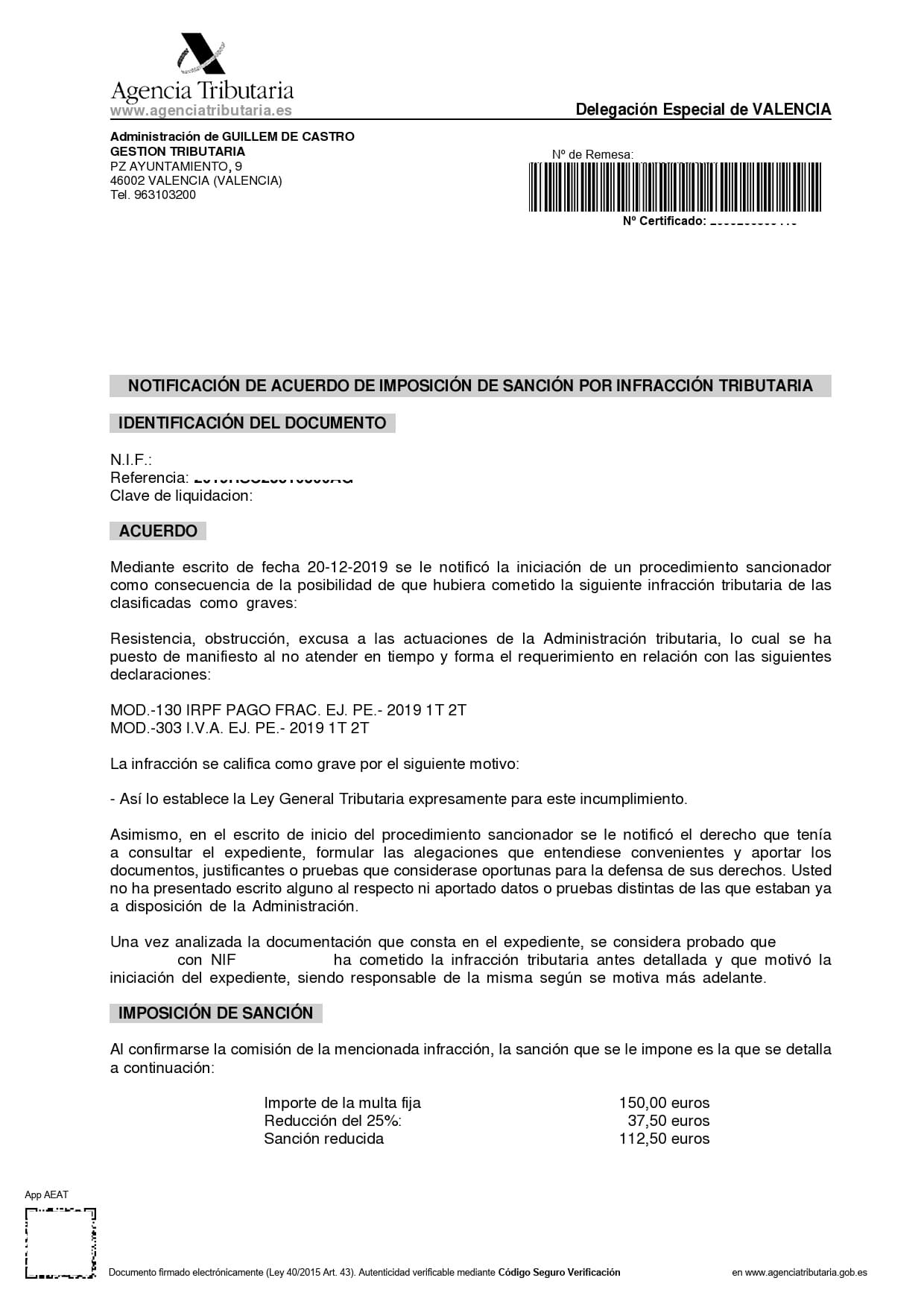
Even if a person believes that no activity took place, ignoring notifications from Hacienda can create separate problems.
Lesson: a notification from Hacienda should never be ignored, even if you believe the registration itself was a mistake.
If Hacienda requests documents after a VAT return or missing VAT filing issue, our guide on Hacienda document requests for Modelo 303 explains what this kind of review may involve.
Another Real Example: A Digital Nomad Visa Applicant
A recent case discussed online followed a very similar pattern.
The individual had moved to Spain only recently, but their Modelo 036 showed an activity start date more than a year earlier.
According to the person, the registration had been completed as part of visa-related formalities before they were actually living and working in Spain.
When a gestor later reviewed the situation, they suggested:
- retroactive Social Security registration;
- payment of past RETA contributions;
- filing missing quarterly returns;
- possible loss of tarifa plana benefits.
Whether that approach is ultimately correct depends on the facts of the case.
However, the situation highlights a common problem:
The tax registration date may not always match the date when a person actually started living and working in Spain.
Visa Processing Delays Can Make the Problem Worse
In one recent Digital Nomad Visa case, the applicant explained that tax registration paperwork had been completed during the visa process.
The visa was not approved immediately.
According to the applicant, the process took approximately 270 days.
By the time the person actually arrived in Spain, Hacienda records already showed an activity start date many months earlier.
This created a situation where the registration date and the actual start of life and work in Spain no longer matched.
The longer an immigration process takes, the larger this gap can become.
Why Hacienda and Social Security Can Create Confusion
Many foreigners assume that Hacienda and Social Security operate as a single system.
In practice, they serve different functions.
| Hacienda / AEAT | Social Security / TGSS |
|---|---|
| Tracks tax registrations | Manages RETA registration |
| Receives tax returns | Collects Social Security contributions |
| Issues tax notifications | Administers tarifa plana benefits |
| Monitors tax compliance | Handles Social Security obligations |
This can create situations where a person appears active to Hacienda while not being registered with Social Security.
For the taxpayer, this may feel logical.
For the administration, it can create inconsistencies that later require explanation.
This is one example of how tax registration, Social Security, invoicing and immigration status can overlap. Our complete guide to self employment in Spain explains how registration, taxes, VAT, Social Security and invoicing fit together.
Why Do Some People Register with Hacienda Before They Are Allowed to Work?
Many foreigners are surprised to discover that their tax registration was completed months before they were legally able to start working.
In many cases, there is no obvious tax reason to do this.
In fact, many foreigners later discover that they do not fully understand why the registration was filed so early.
Sometimes the registration is part of a visa preparation workflow. Sometimes it is simply a recommendation from a gestor or consultant.
Yet the practical consequences can remain long after the immigration paperwork has been submitted.
Instead, the registration may be filed because:
- a visa advisor wants to demonstrate business preparation;
- a gestor follows a standard workflow;
- the applicant believes the registration is required for immigration purposes;
- the distinction between preparing a business and starting a business is misunderstood.
The problem is that Hacienda may interpret the registration differently from the applicant.
The person may think:
I am only preparing my future business.
Meanwhile, Hacienda may see:
An economic activity has started.
This difference becomes important when quarterly filing obligations or tax notifications begin arriving before the immigration process is complete.
Ironically, some people register with Hacienda months before they actually issue their first invoice. If you are wondering whether registration is always necessary before invoicing, see our guide on whether you can invoice without being autónomo in Spain.
A Question Worth Asking Before Filing Modelo 036
Before submitting Modelo 036 or Modelo 037, ask a simple question:
If I am not yet allowed to work, not issuing invoices and not carrying out economic activity, what problem is this registration solving?
If the registration is genuinely required for a specific immigration step, make sure you understand:
- why it is needed;
- what date is being declared as the activity start date;
- whether quarterly filing obligations may arise;
- whether Social Security registration will also be expected;
- who will monitor and respond to Hacienda notifications.
Many problems occur because people understand why they need a visa document but nobody explains the tax consequences that may follow.
Should You File Zero Returns?
This is one of the most common questions.
The answer depends on whether the registration date was correct.
If the activity was validly registered and Hacienda expects quarterly filings, missing returns may need to be filed even if the amounts are zero.
However, if the registration itself was premature or incorrect, it may be better to first ask whether the registration date should be corrected, modified or cancelled.
In other words, the answer is not always:
Just file all the missing zero returns.
The better first question is:
Was the activity really supposed to be active from that date?
What to Do If This Already Happened
If you discover that Hacienda considers your activity active, do not simply ignore the situation.
Start by checking:
- the current census status with AEAT;
- the activity start date shown in the records;
- whether Modelo 130 obligations exist;
- whether Modelo 303 obligations exist;
- whether any notifications are waiting in AEAT or DEHú.
Then consider whether the registration date itself is correct.
If the registration was valid, missing returns may need to be filed.
Before filing anything, it is often useful to review your records using a structured process such as our Quarterly Tax Filing Checklist for Autónomos.
If the registration was filed prematurely or incorrectly, a correction, modification, cancellation or appeal may be more appropriate than years of retrospective filings.
Most importantly, do not ignore notifications from Hacienda while trying to determine the correct solution.
Lesson: first confirm whether the alta date is correct. Only then decide whether the right solution is filing missing returns, correcting the registration, submitting a baja or responding to Hacienda with evidence.
Key Lesson
Filing Modelo 036 or Modelo 037 is not always just paperwork.
Many people assume they are simply preparing for future self-employment, especially during a visa or immigration process.
However, Hacienda may interpret the registration as the start of an economic activity and may expect compliance from that date forward.
The biggest lesson from these cases is not that Modelo 036 is dangerous.
The lesson is that filing a tax registration simply because someone told you to can create obligations long before you are actually ready to work.
Before filing Modelo 036 or Modelo 037, ask one simple question:
If nobody can clearly explain the answer, it may be worth getting a second opinion before creating tax obligations that could remain on record for months while your immigration application is still pending.
Related Guides
- How to Register as an Autónomo in Spain
- How to Switch from a Non-Lucrative Visa to Autónomo in Spain
- Quarterly Tax Filing Checklist for Autónomos in Spain
- How to File Modelo 130 Yourself in Spain
- Hacienda Requested Documents for a VAT Return
Working or becoming autónomo in Spain?
Autonomo.help helps self-employed professionals in Spain understand invoices, expenses, VAT information, Social Security and quarterly tax calculations in one place.
Start Now