NIE vs TIE in Spain: What's the Difference?
If you are moving to Spain, you will quickly encounter two terms that are constantly confused: NIE and TIE.
Many foreigners believe they are the same thing.
They are not.
The simplest way to remember the difference is this:
NIE = number. TIE = card.
Your NIE identifies you. Your TIE proves your residence status.
Quick summary
- A NIE is a foreigner identification number in Spain.
- A TIE is a physical residence card for many non-EU foreigners.
- A NIE is not by itself proof of legal residence in Spain.
- Every TIE contains a NIE number.
- EU citizens usually receive a green EU residence certificate, not a TIE.
- Non-EU residents, including many Digital Nomad Visa holders, usually need a TIE.
- A NIE is often needed for taxes, banking, property, contracts and autónomo registration.
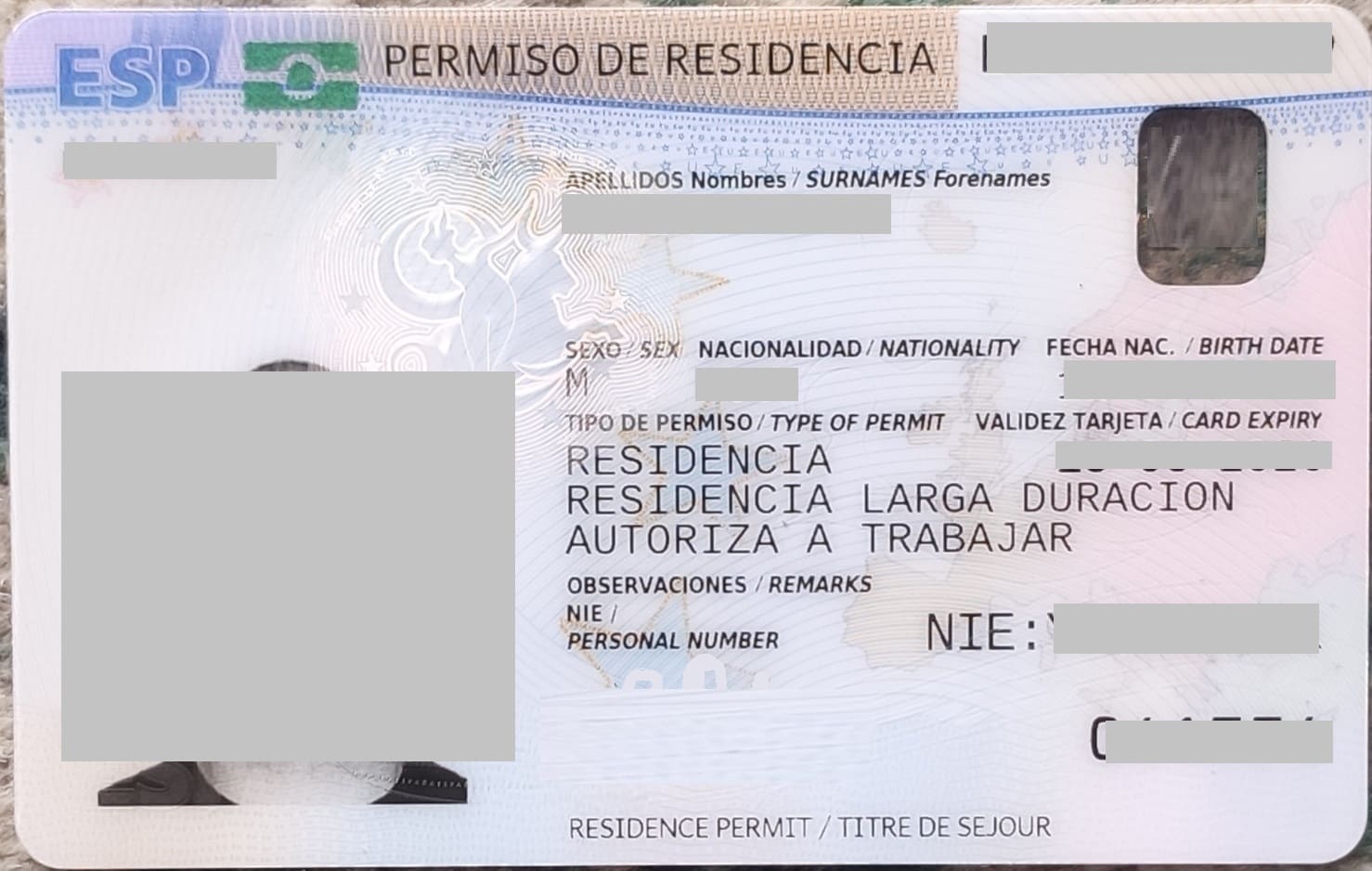
Example of a Spanish TIE — Tarjeta de Identidad de Extranjero.
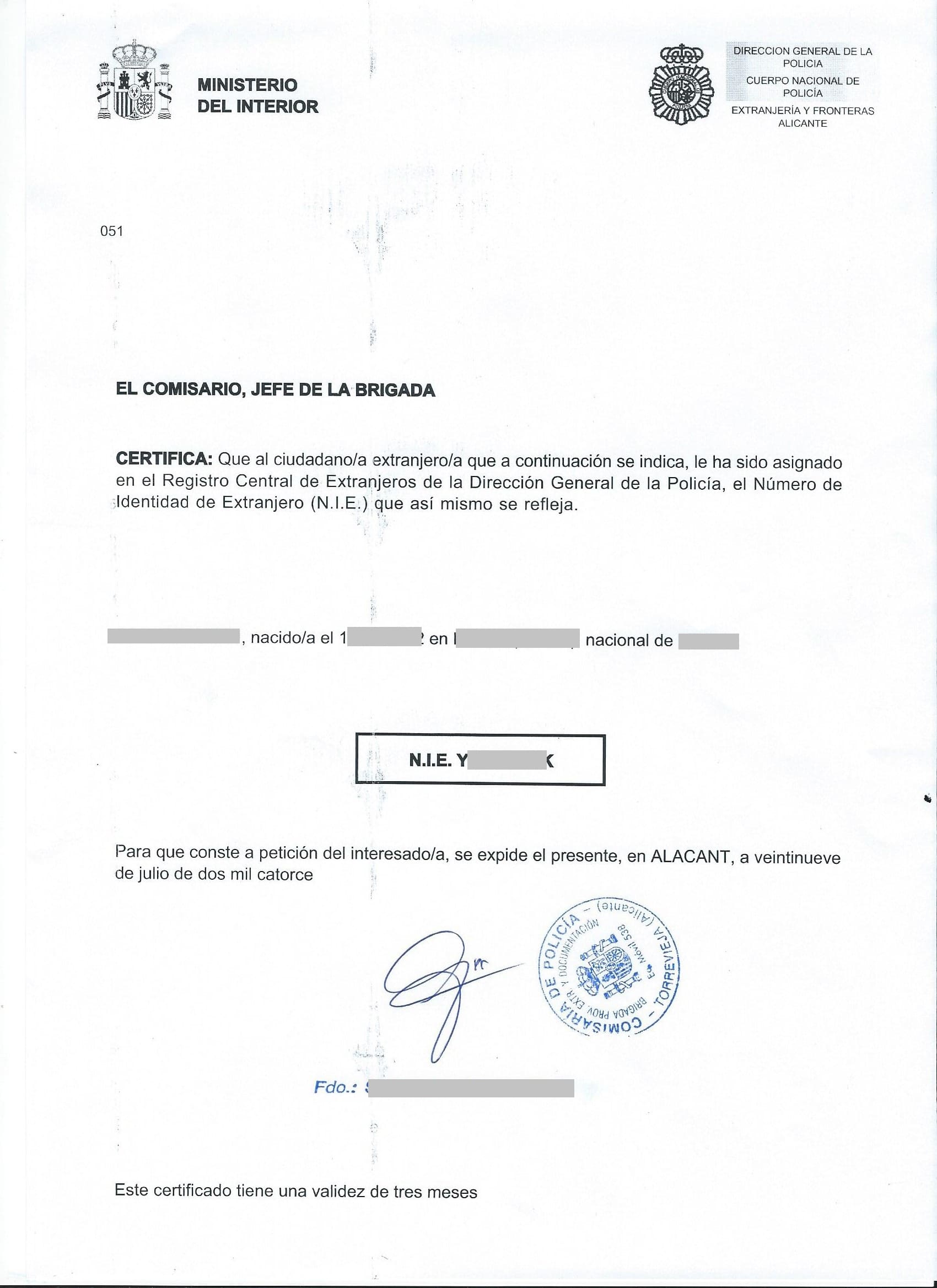
Example of a Spanish NIE certificate showing the foreigner identification number.
What Is a NIE?
A NIE, or Número de Identidad de Extranjero, is a foreigner identification number assigned by the Spanish authorities.
It is used to identify non-Spanish citizens in administrative, tax and legal matters.
A typical NIE may look like this:
Y1234567X
You may need a NIE for many practical steps in Spain, including:
- Opening a bank account
- Buying property
- Signing contracts
- Paying taxes
- Dealing with Hacienda
- Registering as self-employed
- Interacting with Spanish authorities
If your goal is to work as a freelancer, consultant or contractor, see our complete guide to becoming self employed in Spain.
What Is a TIE?
A TIE, or Tarjeta de Identidad de Extranjero, is a physical residence card issued to many non-EU foreigners who live legally in Spain.
Unlike the NIE, the TIE is not just a number. It is a card that usually includes:
- Your photograph
- Your fingerprints
- Your NIE number
- Your residence type
- Your card validity dates
In practical terms, the TIE is the document that proves your legal residence status in Spain.
The Simplest Way to Remember It
The NIE is your Spanish foreigner identification number.
The TIE is your physical residence card.
Many people have both because the NIE number appears on the TIE card.
Simple rule
NIE: identifies you.
TIE: proves your residence status.
Can You Have a NIE Without a TIE?
Yes.
This is very common. A foreigner may obtain a NIE without becoming a resident of Spain.
For example, a person may need a NIE to buy property, open certain bank accounts, inherit assets, invest in Spain or deal with Spanish tax authorities.
A NIE alone does not automatically mean that you have the right to live or work in Spain.
If you are not sure whether you need to register as self-employed before issuing an invoice, see our guide on whether you can invoice without being autónomo in Spain.
Can You Have a TIE Without a NIE?
No.
Every TIE contains a NIE number.
In practice, the NIE is assigned first or as part of the residence process, and then appears on the TIE card.
What About Digital Nomad Visa Holders?
Digital Nomad Visa holders often encounter both terms during the immigration process.
If you receive a Spanish Digital Nomad Visa or residence authorization, you will normally receive a NIE as part of the process.
However, the NIE itself is not your residence card.
If you are a non-EU citizen living in Spain under a Digital Nomad Visa or similar residence authorization, you will usually need to apply for a TIE after arrival or after approval.
Many Digital Nomad Visa holders work for foreign employers or international clients while living in Spain.
If you are considering this route, see our guides for US employees and UK employees.
If you are still looking for international clients or employers, see our guide on finding remote work while living in Spain.
What About EU Citizens?
EU citizens follow a different process from non-EU citizens.
In most cases, EU citizens who move to Spain register as EU residents and receive a green registration certificate.
This certificate contains a NIE number, but it is not the same as a TIE.
EU citizens usually do not receive a TIE card.
This is one of the biggest sources of confusion because many people call the green certificate a "NIE card."
NIE, TIE and Spanish Banks
Banks in Spain often request identity and residence documents when opening or maintaining an account.
Depending on the bank and your status, this may include your passport, NIE, TIE, EU registration certificate, proof of address or tax information.
Banks may also ask for updated identification and residency documents as part of compliance checks. Missing or outdated records can sometimes lead to account restrictions or additional reviews.
Learn more in our guide on why Spanish banks freeze accounts.
Many freelancers also ask whether they can receive international payments through Wise. See our guide on using Wise as an autónomo in Spain.
NIE, TIE and Tax Residency
Immigration status and tax residency are different questions.
Having a NIE does not automatically make you a Spanish tax resident.
Having a TIE does not automatically answer every tax question either.
Tax residency depends on separate rules, including how long you spend in Spain and other personal circumstances.
If you are considering the special expat tax regime, see our guide on Beckham Law in Spain.
NIE, TIE and Autónomo Registration
If you plan to work for yourself in Spain, the NIE is usually one of the key identifiers used in tax and Social Security processes.
Registering as an autónomo is a separate step from obtaining a NIE or TIE.
Our complete guide to becoming self employed in Spain explains registration, taxes, VAT, Social Security, invoicing, deductible expenses and quarterly tax returns.
Once registered, autónomos may need to issue invoices, track expenses and file quarterly tax forms.
If you become self-employed and invoice clients outside Spain, see our guide on how to invoice a client outside Spain as an autónomo.
You can also estimate your future tax burden using our guide on how much tax an autónomo pays in Spain.
Common Mistakes
Mistake 1: Thinking the NIE Is a Residence Permit
The NIE is not a residence permit.
It is only a foreigner identification number.
Having a NIE does not automatically give you the right to live or work in Spain.
Mistake 2: Thinking the TIE Replaces Your Passport
The TIE is not a passport.
It is a Spanish residence identification card, but it is not an international travel document.
You should still use your passport when travelling internationally.
Mistake 3: Thinking EU Citizens Need a TIE
EU citizens usually do not receive a TIE.
They normally receive a green EU residence registration certificate containing their NIE number.
Mistake 4: Thinking a TIE Means You Are Registered as Autónomo
A TIE proves residence status. It does not register you as self-employed.
Autónomo registration is a separate tax and Social Security process.
Common Confusion in Expat Forums and Relocation Groups
In expat forums, Facebook groups and relocation communities, the same confusion appears again and again.
People often say things like "I already have a NIE, so I am a resident" or "I have a TIE, so I do not need a NIE."
Both statements misunderstand how the system works.
- The NIE is your foreigner identification number.
- The TIE is a physical residence card for many non-EU residents.
- EU citizens usually receive a green registration certificate, not a TIE.
- Having a NIE alone does not automatically give you the right to live or work in Spain.
Official Resources
For official information, check the Spanish government and police websites:
- Ministry of the Interior — Foreigner Identity Card
- National Police — TIE procedure
- Cita Previa — Immigration appointments
- Tasa 790 Código 012
What Usually Comes Next?
For many newcomers, obtaining a NIE or TIE is only the first step.
The next questions often involve Digital Nomad Visa rules, autónomo registration, opening bank accounts, working for foreign employers, Spanish taxes and invoicing international clients.
If you later work independently in Spain, you may also need to understand quarterly tax forms such as Modelo 130 and Modelo 303.
Final thoughts
If you remember only one thing, remember this:
The NIE is your number. The TIE is your card.
The NIE helps Spanish authorities identify you.
The TIE proves that you legally reside in Spain.
For many non-EU residents, including many Digital Nomad Visa holders, both documents eventually become part of everyday life in Spain.
Working as an autónomo in Spain?
Autonomo.help helps self-employed professionals in Spain organize invoices, expenses, VAT information and quarterly tax calculations in one place.
Start Now